- |
- 中文|
Institute of Intelligent Sensing and Communication
Directions and Faculties
Topics: Intelligent 5G/6G networks, Intelligent vehicle vommunications for Autopilot, AI-driven edge/Cloud Computing, Intelligent UAV/IoT sensing and communication, Industrial IoT.
Faculties: Professor Zhang Haijun, Associate Professor Zhang Wenyu, Lecturers include Dr. Ma Hui, Dr. Shao Hua.
Leading Proferssor: Zhang Haijun
Pro. Zhang Haijun serves as the vice dean of Institute of Artificial Intelligence of USTB. Prof. Zhang also serves as the Editor of several journals, including IEEE Transactions on Communications, IEEE Transactions on Green Communications Networking, IEEE Communications Letters, and IEEE Open Journal of Communications Society. He received the IEEE CSIM Technical Committee Best Journal Paper Award in 2017, IEEE ComSoc Young Author Best Paper Award in 2018, IEEE Asia-Pacific Outstanding Paper Award in 2019, and Highly Cited Researcher of Clarivate in 2019 and 2020. Prof. Zhang is the PI of more than 10 national projects, including the Outstanding Youth Fund of NSFC 2018, two general NSFC programs, and one sub-project of the National key research and development program.

Pro. Zhang Haijun
Research
Intelligent Wireless Communications
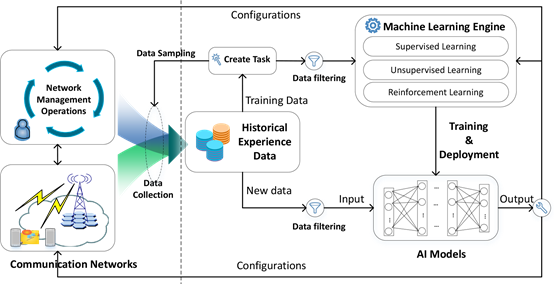
By jointly using classical optimization and artificial intelligence techniques, the research of Intelligent Communication Theory and Technology include: cell deployment management, spectrum sharing, handover, coverage and throughput optimization for B5G/6G wireless communications; AI-based wireless link-budget allocation, interference cancellation, mobility management, resource management, security guarantee for wireless cellular/UAV/vehicle/IoT communications. The goal of the research is to achieve efficient, intelligent, adaptive, scalable and optimized networking and resource management for wireless networks, and reduce the deployment cost and expert intervention in network management.
Publications and Projects
In this direction, our team has conducted a thorough research on the multi-tier network intelligent resource allocation, ultra-dense networks service and capacity optimization, radio spectrum cognition, etc. We published more than 20 TOP journal papers, including IEEE JSAC, IEEE TWC, IEEE TCOM, IEEE CM. We also published over 20 conference papers in to TOP international conferences, including IEEE INFOCOM, IEEE ICCC, IEEE VTC. Our team have led or participated two general programs of the National Natural Science Foundation of China(NSFC), one National key research and development program.
Edge Artificial Intelligence
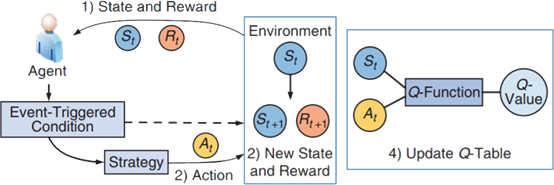
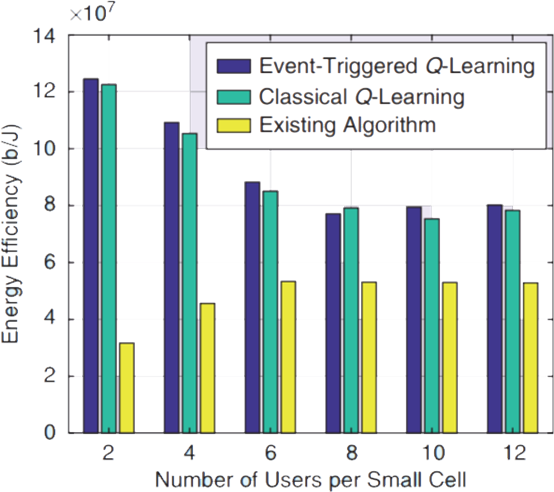
Edge computing has advantages in reducing user-perceive delay and enhance UE computation capacity. The performance indicators of edge computing include time delay, energy consumption, reliability, user experience, etc. Classical performance optimization methods relies on the expert knowledge for mathematical modeling, the implementation cost is high and the efficiency is low. The research of edge artificial intelligence (EAI) is to design and implement efficient, intelligent, independent edge computing performance optimization by using AI techniques like supervised learning (including deep learning), reinforcement learning, unsupervised learning, reasoning and decision-making algorithms. In addition, EAI also includes the research on supporting AI applications in edge computing environment, such as federated learning and multi-task learning.
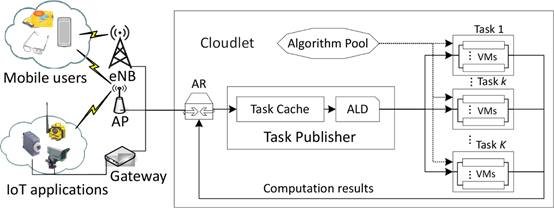
Publications and Projects
In this direction, our team has been focusing on cloud-fog-edge computing research of intelligent wireless networks, including radio and computing resource scheduling, QoS and QoE enhancement, system level energy efficiency and cost optimization. More than 20 SCI journal papers and 10 international conference papers were published, and more than 10 tutorials and keynotes on next generation intelligent networks have been given on the international conference by the members of the team. The team has been granted several state fund including the National Key Research and Development Project, the general programs of National Natural Science Foundation of China (NSFC).
Intelligent Sensing and Industrial IoT
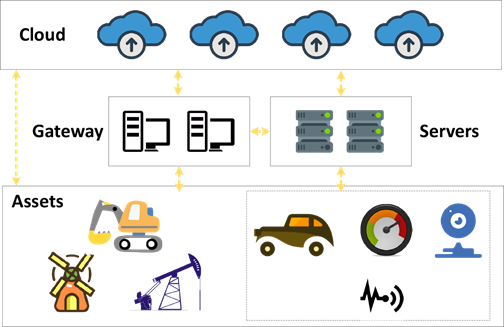
With the fast development of sensor manufacturing, cloud/edge computing, and AI techniques, Internet of Things (IoTs) has been widely used in health-care, transportation, and industrial control and monitoring. The research of intelligent sensing and industrial IoT includes topics on data transmission, storage, and processing related to IoT applications. Particularly, the research studies key technologies for information sensing and fusion of mining production, architecture of intelligent mining-systems, the network and application layers of mining IoT, with the goal of developing the remote monitoring systems to achieve the automatic procedures of every step of the production-chain in mining. The research also includes the intelligent UAV/vehicle sensing and data processing. Combining with AI and advanced wireless communications technologies, the research aims at achieving real-time target detection, classification, and obstacle avoidance for UAV and vehicles.
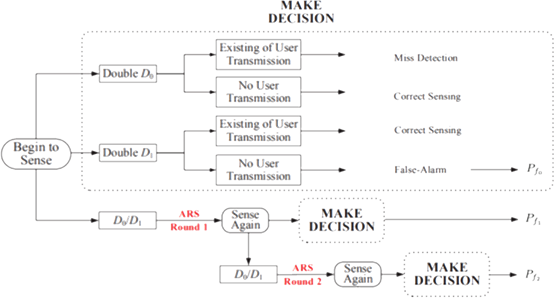
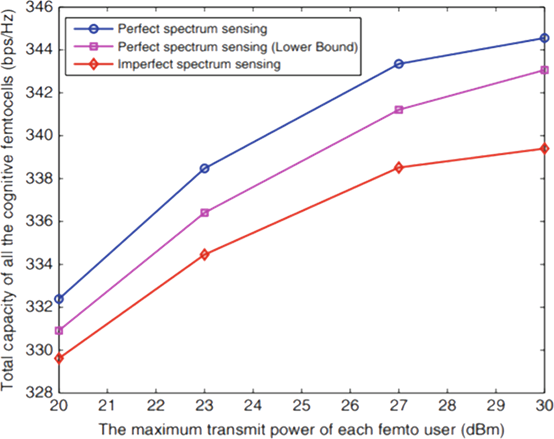
Automatic Repeat Spectrum Sensing framework for 5G IoT networks
Publications and Projects
In this diection, our team focuses on the research of intelligent sensing and industrial IoT, NB-IoT, UAV sensing and communications, Auto-pilot. More than 10 journal papers have been published, including IEEE JSAC, IEEE TII, IEEE TVT, IEEE CM. Our team has participated in developing over 20 standards, and applied/granted more than 20 patents. In terms of fundation, the team have got several funds and programs from China Mobile Communications Corporation (CMCC), State radio regulation of China (SRRC), China telecommunication Corporation.